
Stories Blog / Community Stories / Thrive Magazine
Hitting the Slopes
How one organization is making alpine sports accessible.

Many Edmontonians survive the long winter months by bundling up and enjoying snow sports. But activities that many people take for granted, like playing a game of pickup hockey at the community league rink or cross-country skiing in the river valley, are harder to access for people with disabilities. Enter Canadian Adaptive Snowsports (CADS). Now in its 50th year, the organization runs chapters across the country that connect children, youth and adults with disabilities to specialized equipment and support so they can enjoy downhill skiing and snowboarding. People with physical, sensory or cognitive disabilities, or those who are visually impaired, all receive tailored support in CADS Edmonton’s programs.
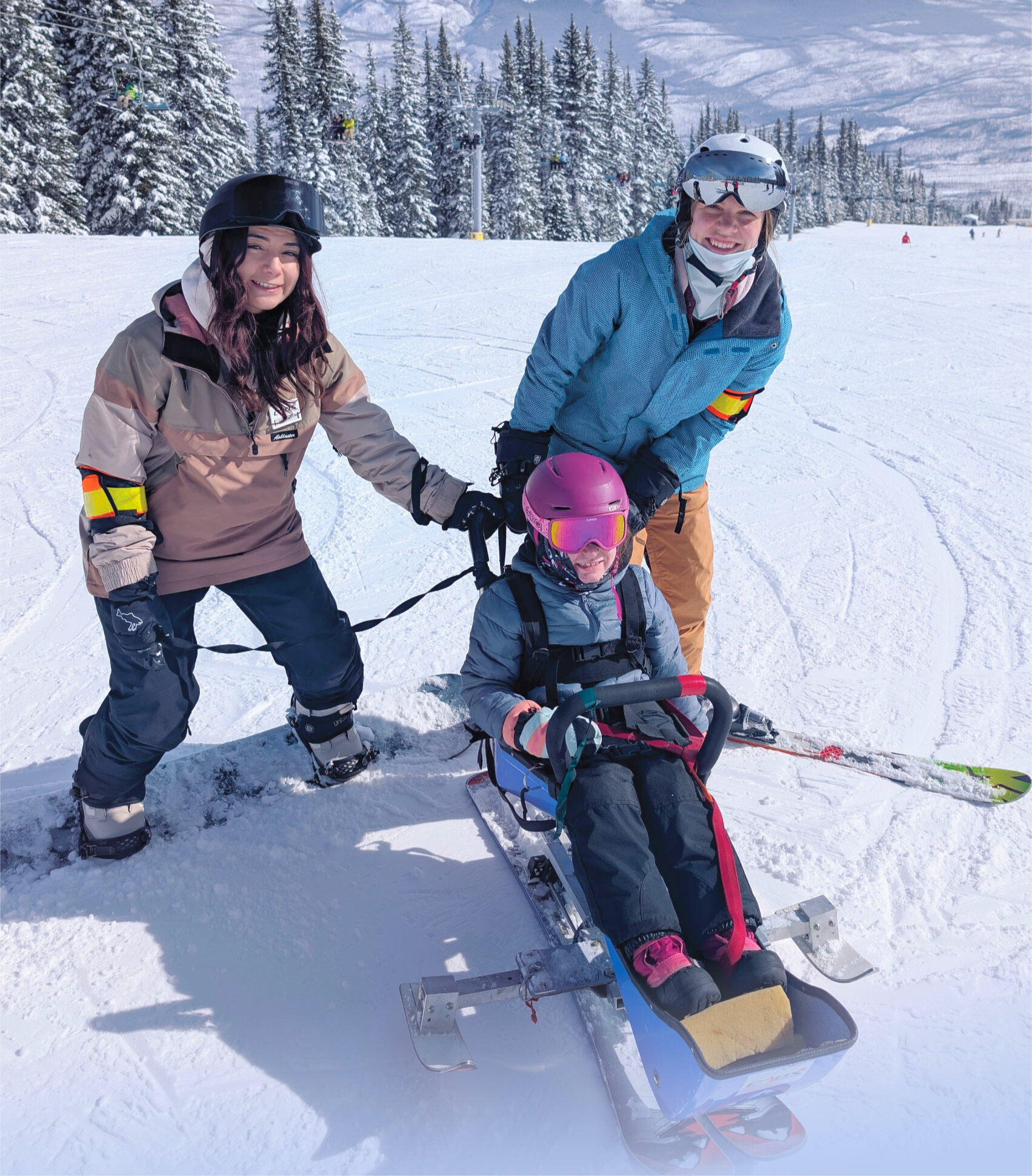
Each skier is unique, and CADS works with participants to identify what kind of equipment and support will help them succeed. The most in demand equipment CADS offers is a sit-ski, adaptive equipment that looks like a sled with one or two skis on the bottom. Sit-skis are often used with outriggers, poles with skis on the bottom to help with balance and turning. Lola, an eight-year-old participant, has been with the program for three seasons, and is excited for her fourth. “I felt nervous when I first tried the sit-ski,” she says.
“Once I got used to it I felt happy!”
From January to March, students come to Rabbit Hill Snow Resort for weekly lessons, which are the core of CADS programming. CADS also offers support for ski field trips — so students with disabilities can enjoy the slopes with their classmates. “If we have volunteers available, they’ll come and meet you right at the hill, and that child is now participating in that field trip with their peers. That’s a great, great thing to see, and they’re excited, their peers are excited for them,” says Faye McConnell, CADS Edmonton president. Some participants even graduate to Learn to Race — a more intensive program for those who ski at a high level and might be dreaming of the Paralympics.
The specialized equipment CADS offers is in such high demand that there’s a waitlist for some programs. Thanks to a $31,900 grant from Edmonton Community Foundation (ECF), CADS Edmonton will be able to shorten the waitlist for equipment by adding to their fleet of sit-skis — the biggest cost for the organization. “Access to healthy recreation shouldn’t have barriers,” says Dave Chowne, Grants Associate at ECF.
“Programs like CADS not only open the door to physical activity, but also to confidence, belonging and joy. We’re proud to help ensure more people can share in these experiences that strengthen both body and mind.”
Students in the program also find community and camaraderie on the slopes. “To get out on snow and participate in the outdoors in winter is just an absolute joy for them, and you see it in the expression on their faces,” says McConnell. “The families do stay there during the time that their child is participating in the program, and it gives them an opportunity to network with each other,” McConnell says. Many families come to CADS because they already ski or snowboard, and want to include their child in the family activity. “Parents are sometimes unsure whether they’ll be successful at this type of thing,” says McConnell. “I have listened to parents over the years say ‘we had no idea that our child could participate in this type of activity with such success,’ and so that tells us a lot and that families want to really keep their children outdoors and embracing these winter months.”
Nicole, Lola’s mom, adds that she loves the program as much as her daughter does. “It’s something we can enjoy as a family that loves adventure!” “My favourite thing about CADS is going down steep hills with my crew,” Lola says. By “crew”, she means the volunteers who accompany participants down the hill. Those volunteers fuel CADS’s programming, teaching participants, guiding them down the hill or helping them onto the chairlift. Last year, CADS Edmonton had 95 participants and 140 volunteers. Some of those volunteers are former participants themselves, giving back to the program that helped them learn to ski and enjoy the winter.
This story comes from the Fall 2025 Edition of Thrive Magazine.
Read the full issue.
