
Stories Blog / Community Stories / Thrive Magazine
Independence Through Cooking
Autistic adults get hands-on experience with the life skills they need to thrive
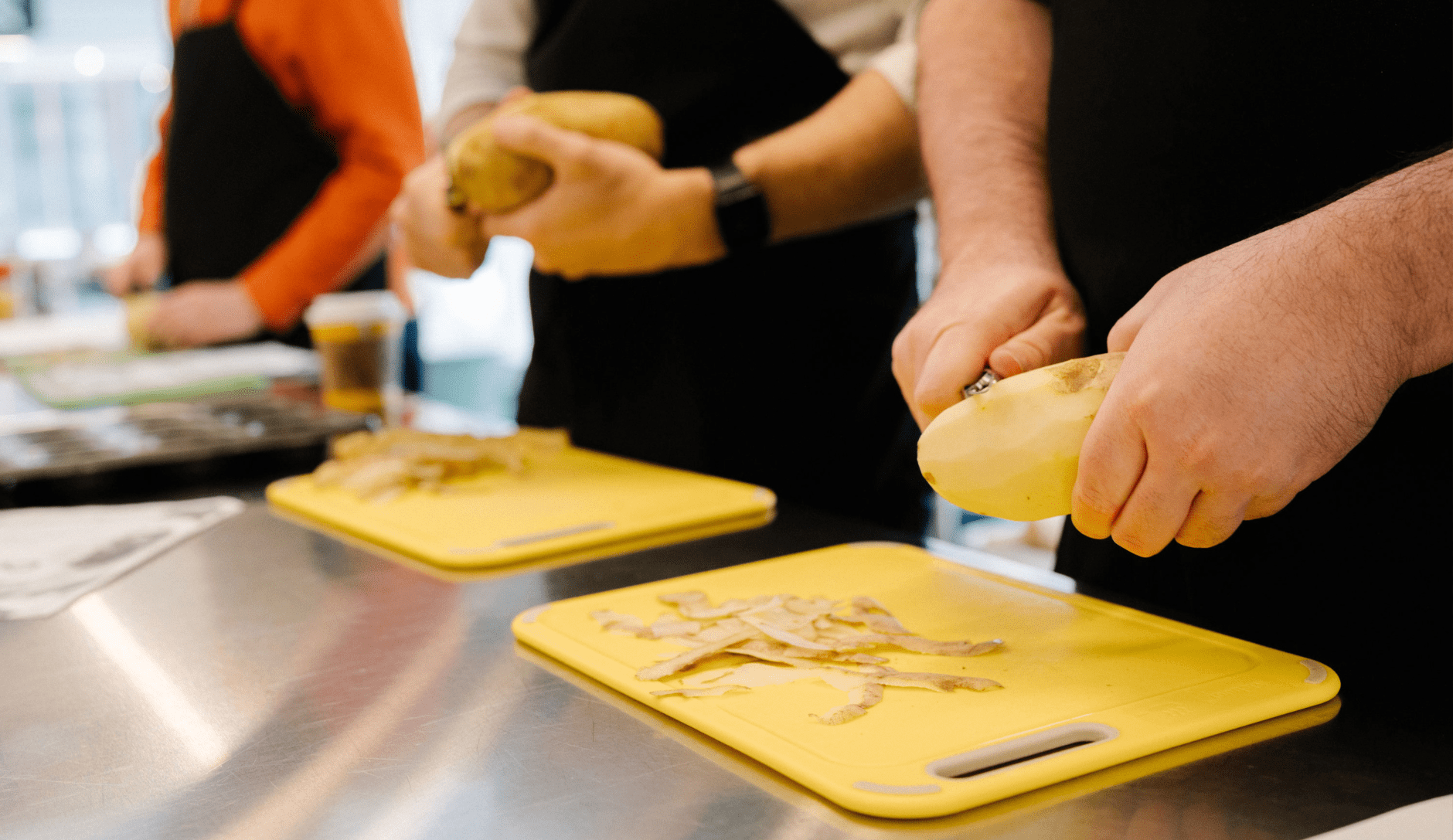
The smell of boiling potatoes wafts through the air, an important part of pâté chinois, a French-Canadian dish similar to shepherd’s pie. Hair nets and aprons are in place for the dozen or so participants as they begin to make banana muffins, multi-tasking while they wait for the potatoes to soften. They are taking part in a new cooking class offered by the Autism Independent Living Association (AiLA), teaching life skills to autistic adults thanks to a $15,000 Community Grant from Edmonton Community Foundation (ECF).
The association’s main focus is on developing intentional, supportive housing for autistic adults. But the organization has identified other supports and services its membership is looking for, often related to skills they need to successfully live on their own. One of those skills is cooking, helping autistic adults learn to make nutritious meals and develop cooking skills while keeping an eye on their budget. AiLA President Leanne Carr said interest for the classes has been strong. “Within 24 hours we had almost all of our spaces full,” she says. “Even on our social media every time we post about it we’ve had an increase in the responses, so we’re very excited.”
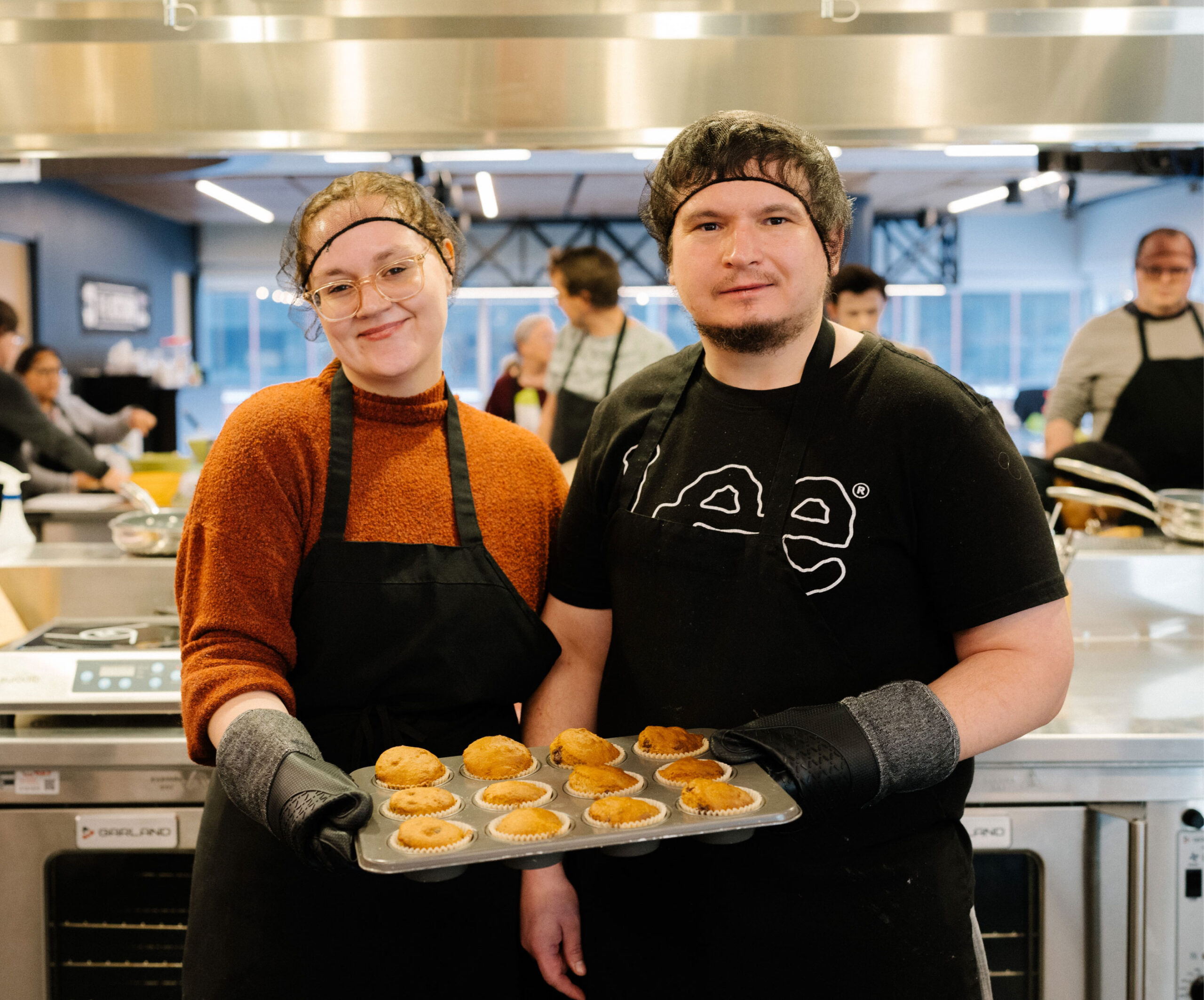
Participants make simple recipes, learn how to make vegetarian and gluten-free substitutions as well as ways to save money at the grocery store. Students also learn how to adjust meals to accommodate allergies, preferences and food aversions, as some autistic adults have sensory concerns that can make them sensitive to food textures, sensations and spices. The students take home the food they cook and the recipes at the end of the day, but the cooking and baking skills are the most important part. Everything from measuring and knife skills to safety tips and how to use a stove and oven is included in the course.
The classes are taught at The Kitchen on the second floor of the Stanley A. Milner Library, a 2,100-squarefoot teaching space with state-of-the-art equipment. Carr says they anticipated using part of the ECF grant to rent space for the classes, either from a commercial kitchen or a community hall. However, ECF was also able to connect them with the Edmonton Public Library (EPL), and they were able to secure the space for free.
“Our role as a community foundation goes beyond simply cutting cheques,” says Cassandra Lundell, Manager, Grants at ECF. “Because of our relationships across Edmonton’s charitable sector, we’re often able to connect organizations in ways that strengthen their work. Bringing AiLA and the EPL together is a great example of how collaboration can stretch resources further and create better outcomes for the people these programs are meant to serve.” The partnership with EPL also helped open the door to support from the Edmonton Food Bank, which is providing much of the food for the program. This has lowered costs significantly, allowing the initial six classes to expand to eight or more, while also helping cover transportation costs such as parking or taxi fares.
With the EPL space, AiLA would like to turn the classes into an ongoing program. That permanent basis would mean continuing classes, but also more opportunities for AiLA’s clients to connect with one another and share learnings. Carr says she’s hoping to start a cooking club or group for autistic adults, allowing them to share tips and tricks and socialize around a shared interest.
As an autism-led organization, AiLA emphasizes listening to the needs and experiences of their members — like AiLA Director at Large, Janae Mercier, who saw the need for the cooking class. She brought the idea to her fellow board members, with the goal of learning some new recipes and becoming more independent. “For me personally, as a woman with autism, it’s important to learn how to cook. I love eating out at restaurants but the food is always better when it’s cooked at home,” says Mercier.
“I would like to learn to be more independent in the area of cooking since my parents are getting older.”
Of course, cooking and baking can be good fun, too. The recipes Mercier said she’s most looking forward to? Fajitas and pizza.
This story comes from the Spring 2026 edition of Thrive Magazine.
Read the full issue
