
Stories Blog / Community Stories / Thrive Magazine
From Lures to Legislation
Kirsten Letendre’s Métis journey of stewardship and self-discovery
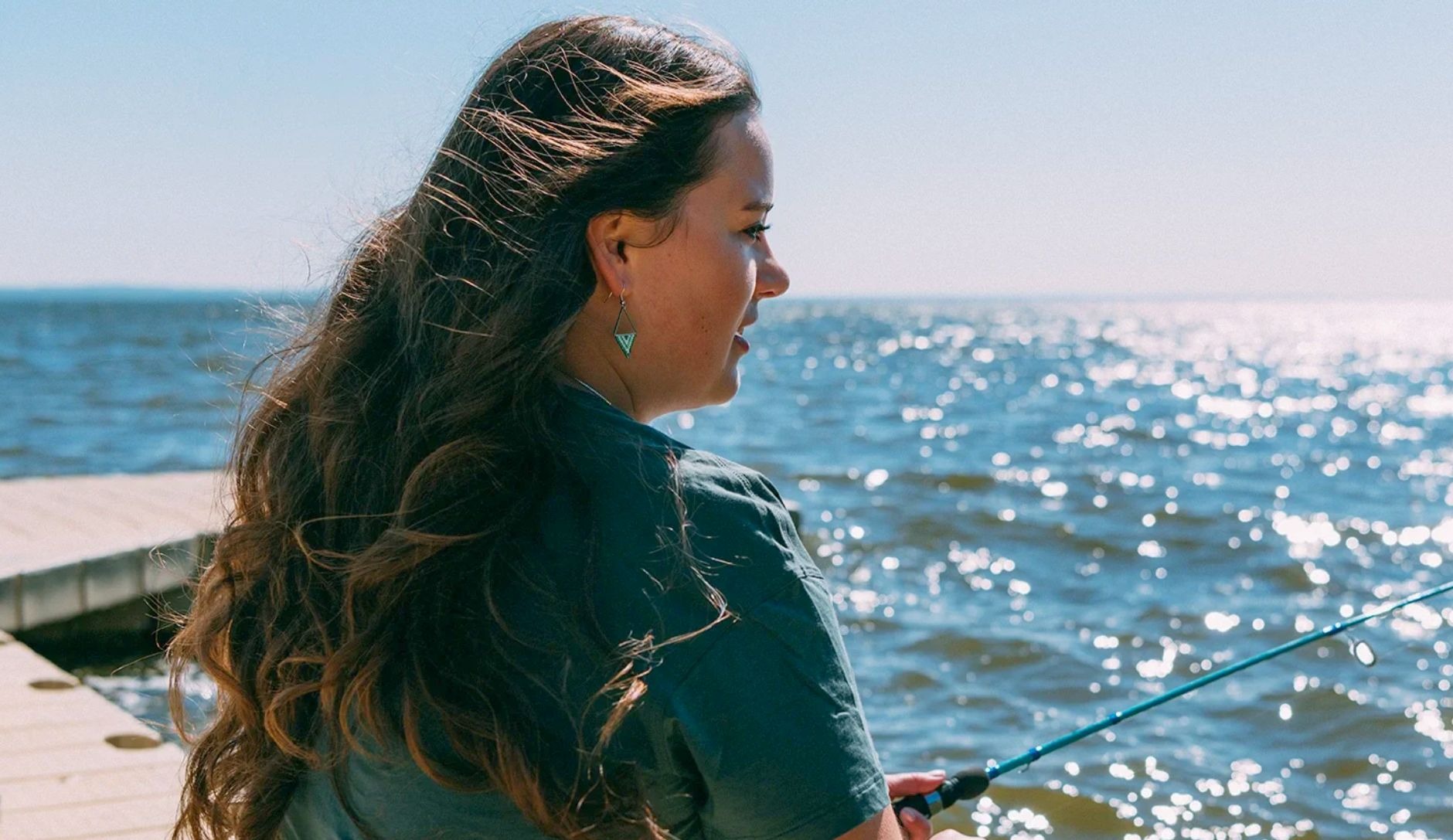
Kirsten Letendre remembers her proudest fishing moment. She was six years old, standing
on the banks of Lac Ste. Anne, wielding a bright pink Barbie fishing rod. The line tugged, the reel spun, and suddenly, the lake offered up her first catch. “It was this plastic toy rod,” she laughs. “But it worked! I’ve been fishing my whole life, but that one was special.”
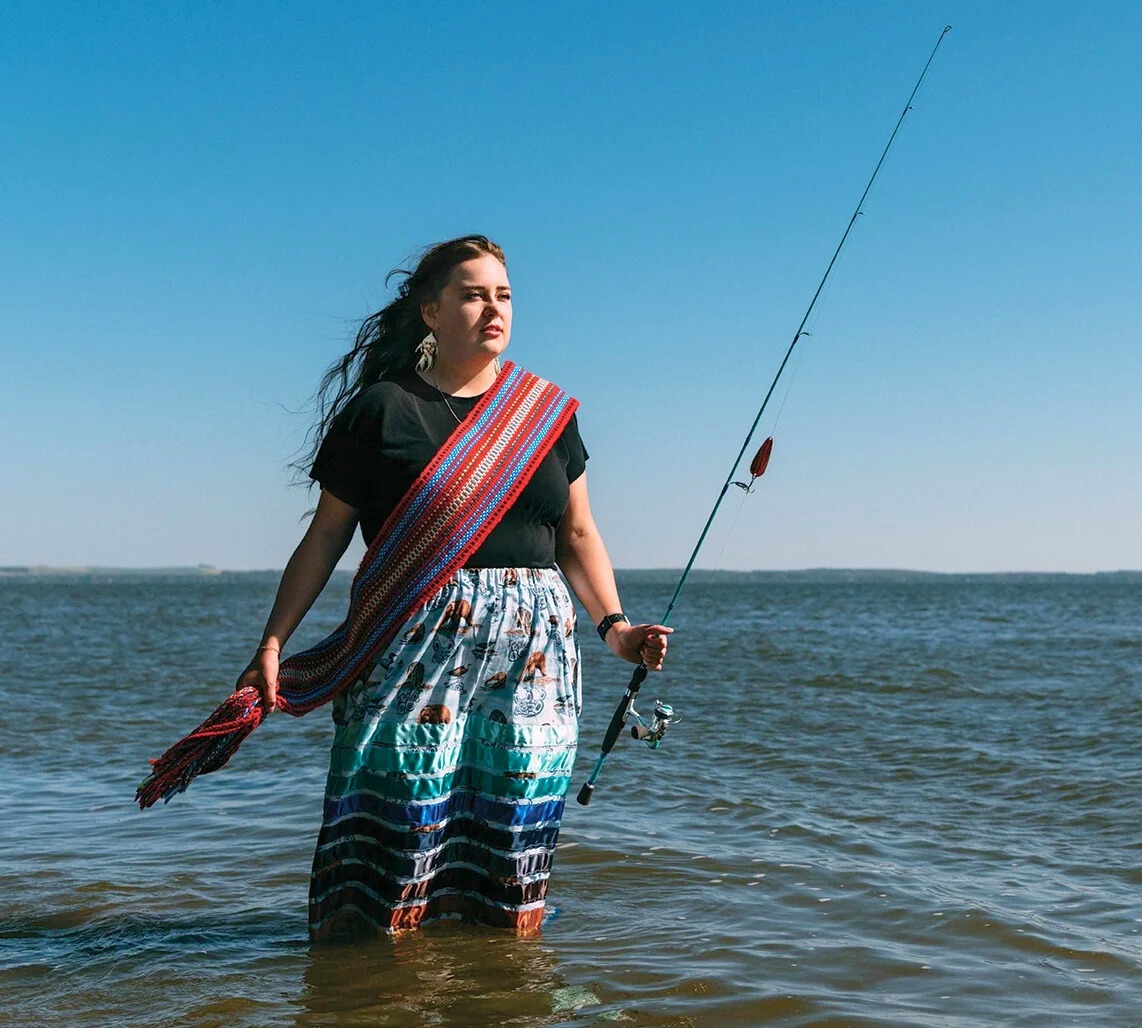
Letendre is a proud seventh-generation Lac Ste. Anne Métis woman with deep family roots in the community. Her great grandfather was a commercial fisherman, and her father learned the trade as a boy. “I grew up just like that — always outside, camping, fishing, harvesting,” she says. “All my memories are on the land or the water.” Even though Métis culture wasn’t something her family could celebrate openly due to racism in the region, their way of life was grounded in traditional knowledge. Her parents, she says, have always been her biggest cheerleaders, encouraging her curiosity and instilling a love and respect for nature. Letendre’s love for nature led her to pursue a Bachelor of Science in biology at MacEwan University, and financial support from the Belcourt Brosseau Métis Awards (BBMAs) made her education possible. But more than that, the BBMAs transformed her sense of identity. “Growing up, we didn’t talk openly about being Métis,” Letendre says.
“But going to the BBMA gala, being wrapped in a sash by an Elder — it was life-changing. It gave me permission to be proud.”
The BBMAs were established at Edmonton Community Foundation in 2001 by Orval Belcourt, Dr. Herb Belcourt and Georges Brosseau K.C. Since then, the BBMAs have given over 3,000 awards to Métis students throughout Alberta, distributing more than $12 million to assist with their tuition expenses. Today, the BBMAs remain one of the largest non-governmental sources of funding for Métis learners in Canada. However, Letendre’s journey wasn’t without hurdles. In 2019, she fell seriously ill just before the semester started. Hospitalized twice and forced to withdraw from classes, she was terrified to contact the BBMAs. “I finally called Theresa Majeran with a shaky voice, explaining what happened and asking if I could defer my funding,” Letendre says. “And she just said, ‘You focus on feeling better. If you never give up, you never lose.’ I’ve had those words on a sticky note on my computer ever since.”
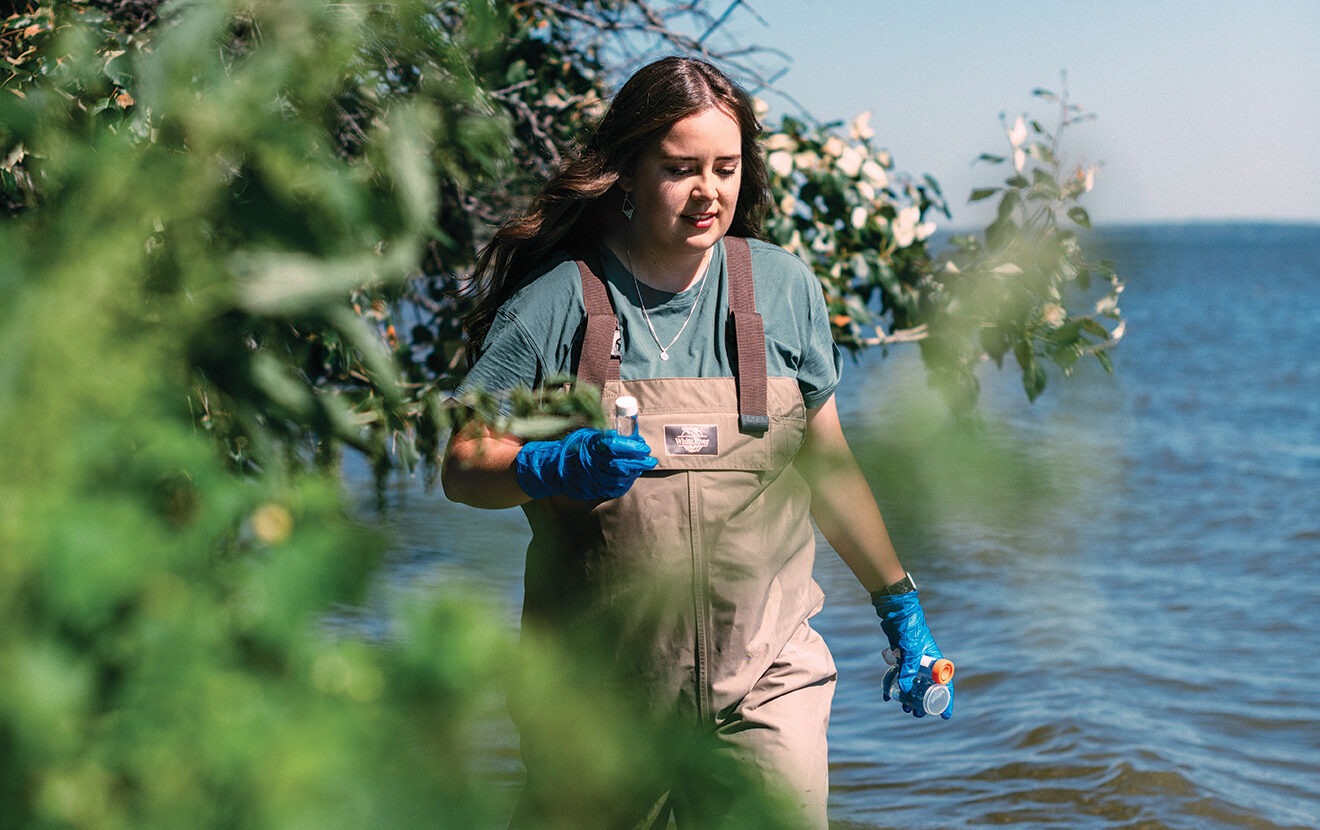
That break from school proved pivotal. Upon returning, she ran into a lab tech named Jill while carrying a bucket of fish guts for parasite research. Jill suggested she apply to the Alberta Lake Management Society (ALMS). Letendre didn’t get the first job — or the second. But she asked for feedback both times. Then, her future boss called to offer her a six-month contract before it was even posted. “That was three years ago,” she says. “Now I’m a full-time staff member and I’ve worked on every program at ALMS.” Letendre works with ALMS, a nonprofit focused on lake health in Alberta. Acting as “connective tissue,” ALMS bridges citizens, government and organizations to monitor water quality and promote community stewardship. She is also an approved harvester with the Otipemisiwak Métis Government within Alberta, helping lead cultural harvesting workshops for families at Pigeon Lake. As the only woman on her team, she began speaking about the roles of Métis matriarchs — starting with a five-minute talk that evolved into full webinars.
Her advocacy brought her to Ottawa in 2023 for the Métis National Council’s Youth Summit. The connections she made at the summit resulted in an invitation to help advise the Canada Water Agency on integrating Indigenous knowledge into the Canada Water Act. She later joined national water circles through Les Femmes Michif Otipemisiwak. In spring 2025, Letendre was awarded the King Charles III Coronation Medal for her contributions to water stewardship and Indigenous education — joining a cohort of mostly Elders and aunties.
“I get to live the dream every single day,” she says. “And maybe one day, I’ll have the eighth generation of Letendres growing up on these lands and waters, carrying it all forward.”
This story comes from the Fall 2025 Edition of Thrive Magazine.
Read the full issue.
