
Stories Thrive Magazine / Community Stories / Blog
Forging Ahead
How one organization helps women get into the trades
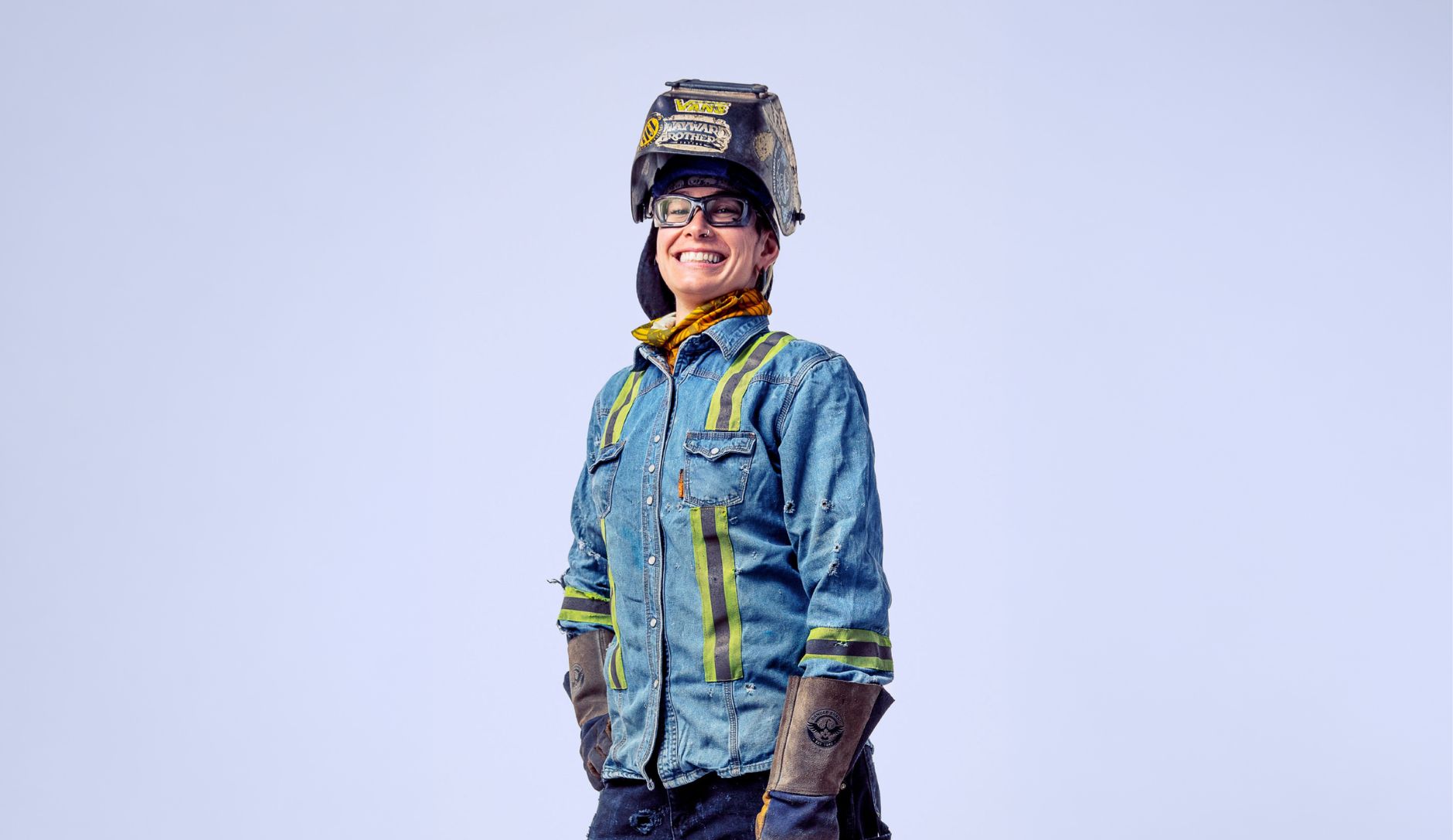
When Natalie Bak first moved to Alberta in 2008, she hoped to find a career in the trades, but no one would give her a shot. “No one wanted to hire a 19-year-old girl with zero experience, especially when the economy had dipped,” she says. But one day a radio ad caught her ear. A non-profit organization called Women Building Futures (WBF) was accepting applicants for its program that helped women enter the trades.
“I took the day off work from my regular job and went in for an info session. I got to see the scope of what they had to offer”
She decided to try the 17-week program, Journey to Trades, that provided insight into a range of career paths — from electrical to carpentry and plumbing — and came away with a passion for welding. Now, 18 years later, she’s a Red Seal welder. “I look back at all the adventures, all the experiences that I had, all the different places that I’ve been — I’ve gotten to travel all over Western Canada, welding,” she says. “I’ve gotten to go up in the Northwest Territories, up in the tundra, at a diamond mine. It’s been amazing.”
The program Bak attended is just one of many ways WBF helps women build their careers. “We help women transition to careers in the trades and transportation,” says WBF CEO Carla Madra. “We work with the women who are coming in from the application stage, ensuring that they have the wraparound supports that they need to get through programs — so everything from child-care plans, transportation plans, sustainable living arrangements. And then we also have a food pantry to support women who are challenged from a food security perspective.”
Since 1998, more than 3,000 women have participated in its programs. Many of them have gone on to have viable careers in the trades, benefitting both themselves and their families. “One of our graduates was talking about the fact that she was actually able to take her children on vacation,” Madra says. “It’s the start of their path to greater security and a greater ability to provide for your family and contribute to your community.” In Alberta’s construction industry, women only account for about five per cent of tradespeople. Considering an estimated 40 per cent of tradespeople will need to be replaced across North America in the next decade, opportunities abound.
One of the ways WBF funds programming is through its endowment at Edmonton Community Foundation (ECF). The JudyLynn Archer Fund was established by WBF’s founding CEO and president, and covers tuition and housing costs for women in the program. In 2017, Archer donated $100,000 to the fund, along with matching donations from two oil companies, North West Refining and Canadian Natural Resources Limited, for a total $300,000 to kick it off. These initial gifts were invested and every year a portion of the value of the fund is provided to WBF as a grant, while the balance of the fund continues to grow in perpetuity. “Endowments create lasting, dependable support that organizations can count on year after year,” says Matt Mandrusiak, Manager, Philanthropy at ECF.
“By building funds like the JudyLynn Archer Fund, Women Building Futures can move beyond the uncertainty of short-term granting cycles and plan for the long term — ensuring women have opportunities not just today, but for generations to come.”
When the fund launched, Archer said it was in memory of her great-aunt. “Throughout my years at Women Building Futures, I witnessed miracles that women achieved when they set their minds to it. This endowment fund is my way of honouring my great-aunt by paying it forward,” she said at the time. Over the years, funding from ECF has been instrumental to WBF’s work. “We’re very grateful for the ECF,” Madra says. “They bring a lot of value to our community and we’re happy to be a recipient of their good work.” Even after graduation, WBF continues offering support to graduates. For her part, Bak was able to receive funding for additional training programs, like earning a rope access ticket, a requirement for conducting work while suspended by ropes.
“I’ve also been given opportunities to go be part of really cool events and panels,” Bak adds. “I get to connect with people and it just broadens my network.”
This story comes from the Spring 2026 edition of Thrive Magazine.
Read the full issue
