
Stories Blog
How Mark Tewksbury Buoys Success
The Olympic gold medalist brings a message of authenticity, collaboration and collective effort that rings true to ECF's philosophy.

When we think of an Olympian, we might imagine an individual athlete on a podium: a personal best, a singular win. But Mark Tewksbury is quick to disavow the notion of elite sport as an individual pursuit. Instead, the highest achievements are the result of communities built through connection and a shared commitment.
Tewksbury has been a public figure since winning a silver medal in the pool as part of Canada’s 4x100m medley relay team in the 1988 Olympic Games in Seoul. By the 1992 games in Barcelona, he was a linchpin on Team Canada, and he won the gold medal in backstroke. He retired from swimming that year, having won 21 national titles, set seven world records, earned a handful of Olympic medals and appeared on the cover of Time magazine. Tewksbury came out in the late 1990s.
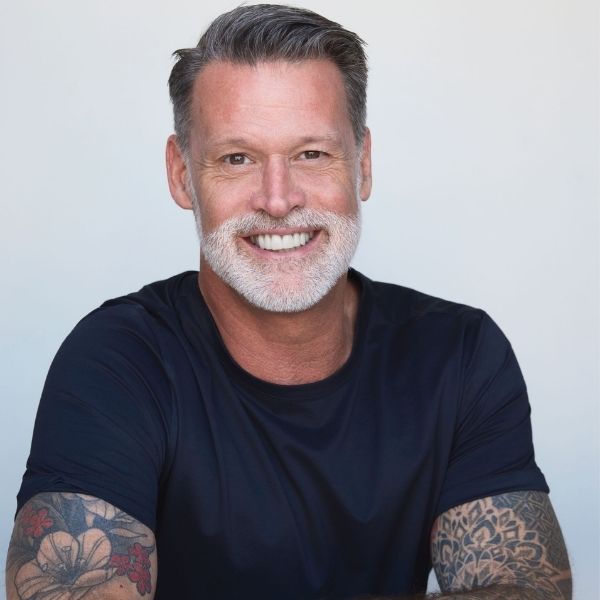
An Olympian, public speaker — and now a Red Seal cook — Tewksbury still manages to create himself afresh, while working steadily as a community builder. It’s why Edmonton Community Foundation chose him as a keynote speaker to address the organization’s Annual Luncheon this past June. Tewksbury shared his thoughts in an interview.
What has sport taught you about community?
You don’t get paid to get up at 4:30 in the morning to go jump in a cold pool. You have to tap into passion and friendship. I loved the community part of swimming. Swimming is an individual/team sport because it’s impossible to swim for hours a day by yourself. You need a group to pull you through the workout. It’s hard. Eventually, somebody wins a title or breaks a record. I happened to be the one for my swim club that won an Olympic gold medal. But I started with 500 or 1,000 kids, and we all went through the same thing. And I couldn’t have done it without those people.
So this applies at elite levels, too?
Yes. At the first Olympics I was at, in Seoul in ’88, the Canadian Olympic team was not united. It showed, and we imploded. Barcelona was different, we were one unified Olympic team.
What does that say about life outside the pool?
People who are disbanded can unite around a common goal. I’ve been in situations where everyone was just looking after their self-interest. We get fooled into this idea that if we work with other people, we have to “give up” something as opposed to seeing how much we can gain.
When you work with teams and encounter that ‘give up’ vibe, what do you do?
Working with a group of health-care professionals once, I took a step back and asked the room, “Wait a minute, we all agree we care about patients’ health, right? OK, there’s a common area here.” And that’s part of what community is about. You have to create a space where people feel comfortable enough to be themselves, and be yourself.
People notice the big things, like Olympic medals. What is the unifying aspect of incremental progress?
Improvement doesn’t go in a straight line. Sometimes that means I had the worst day ever, but at least I got it behind me. Incremental progress depends on how you motivate people, having a sense of pride in your work, feeling like you’re a part of something meaningful. As a leader, if you can ensure that people understand how they’re part of meaningful work, that goes a long way. Offer somebody positive feedback, watch what happens to them and what comes back to you.
How did your coming out story shape you as a leader and an advocate?
It has evolved over time, and I would call myself a reluctant advocate. I grew up in a time where my parents were very proper and conservative. You don’t talk about your private life in public, ever. And I didn’t enter this life thinking that I would speak about my story, or that sharing my story would be activism. Advocacy has been a good surprise because I didn’t see it happening. I had started public speaking before I came out, I’d been sharing my story in a fun way, and I had become a good storyteller. I just had neglected to tell that big part of my story. But being authentic proved empowering, and it lends itself to speaking up about injustice in other situations.
What advice do you have about moving forward when you just don’t feel like getting out of bed?
Those days come. When you’re receiving criticism publicly, it’s hard to distance yourself. Some people are great at it. When I was chef de mission (at the 2012 Olympic games in London), I had to control how I showed up as a leader during that time. When you’re doing good work, you’ve got a clear vision. Those are the things that keep leaders sleeping at night. If I go to bed knowing I did everything I could to align with the goals we’ve set, the purpose of organization and the culture we’ve committed to creating, that’s important.
The word you often use is ‘bold.’
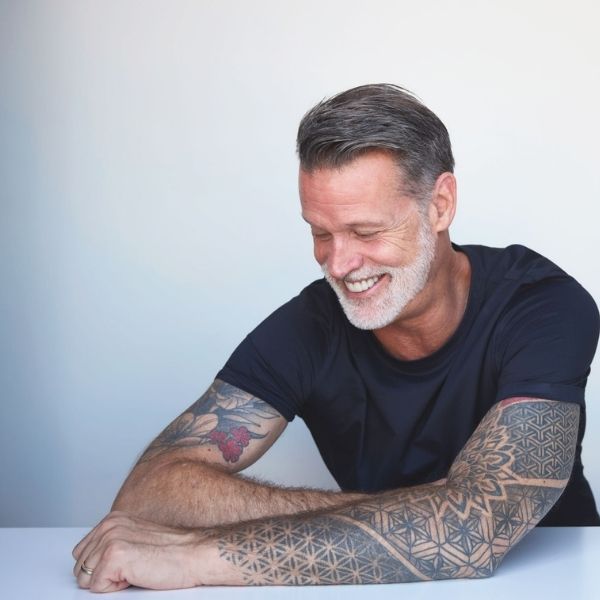
Yeah, if people can rally around a common goal or purpose, one of those bold, out-of-the-box goals, it sparks a different way of thinking. Boldness is not just whimpering along and hoping that something works. It’s having some guts, passion and belief. But boldness also lies in incremental gain. If you’re checking your progress every five years, you’re probably four years too late.
How does a leader get continuously better?
Great leaders possess self-reflection, perspective, openness, ability to see their mistakes and grow from them. I’m grateful to sport for teaching me that. It’s a great skill to be open to critical feedback, or constructive feedback, not meant to insult or hurt feelings. But it’s a skill. Great leadership is getting out of the way and helping people see their own challenges and gaps in a way that helps them grow and doesn’t shut them down or make them feel stupid. Not everybody has the emotional intelligence to be able to help others grow. A great boss adapts to the personality of the teammates.
In the context of that winning mindset, speak to your leadership.
It starts with being courageous and doing things no one’s done. Even if it goes contrary to the most logical way, it might turn out great. When I was swimming, that mindset made me innovate. I enlisted synchronized swimming coach Debbie Muir (now a lifelong friend) to help improve the underwater portion of my swim. I thought, “Who better than a synchronized swimmer to help with that?” That thinking was fantastic when I was competing, and in the years after. Leadership is about asking, “How can I be my best self?”
Tell me about your relatively new business.
My career has been in the world of public speaking and leadership, and that meant travel. I didn’t want to travel as much, so I needed to figure out a way to do what I was doing, but at home. I went to SAIT and became a Red Seal cook. Now I combine cooking, public speaking, leadership, all in one evening. It’s a curated three-and-a-half-hour experience. It’s called Mark Tewksbury’s Inspirate Experience. And yeah, I love bringing people together.
What advice would you give to your 14-year-old self?
It’s funny. I just gave a speech in Amsterdam, and I said if you had ever told 14-year-old Mark that he would be sharing his private life publicly, he would have said, “Never!” but here I am. I would say to 14-year-old Mark, “Never say never, and it’s going to be OK. As hard as this is right now, this is your story you’re going to share, and it’s going to make a big impact.”
This conversation has been edited for length and clarity.
This article was first published in Thrive Magazine, Fall 2026.
